When shopping for a new speaker system or upgrading your home audio setup, one of the first choices you’ll need to make is whether to go with active or passive speakers.
At first glance, they might look similar—but there’s a big difference in how they work, how they’re installed, and who they’re best suited for. In this article, we’ll break down the pros and cons of each to help you decide which option fits your needs and lifestyle.
What’s the difference between active and passive speakers?
Let’s start with the basics.
Active speakers
An active speaker has a built-in amplifier, which means it doesn’t need an external amp to function. You simply plug it into a power outlet and connect it to your audio source—via Bluetooth, Wi-Fi, or a wired connection—and you’re ready to go.
Example from Magnat: The MONITOR REFERENCE 2A is a great example of an active speaker with integrated amplification, wireless streaming, and rich, detailed sound.
Passive Speakers
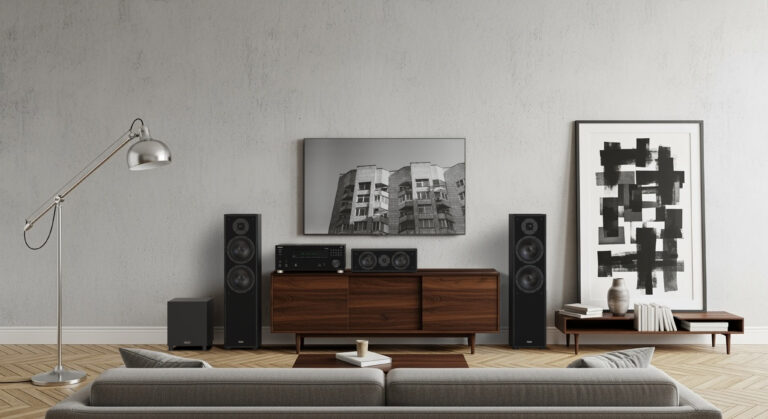
A passive speaker doesn’t include an amplifier. Instead, it relies on an external amplifier or AV receiver to power it. This gives you more control over your system’s components—but it also means a more involved setup process.
Example from Magnat: Passive speakers like the Signature 809 or Monitor S70 are ideal for building a custom hi-fi or home cinema setup with your preferred amplifier.
Active speakers: pros and cons
Advantages
- Simple setup – no separate amp required
- Compact design – fewer components = cleaner look
- Calibrated sound – amp and drivers are tuned to work together
- Wireless options – great for streaming and multiroom use
Considerations
- Less upgrade flexibility – You can’t switch out the amp later
Passive Speakers: Pros and Cons
Advantages
- Full system control – Choose the amp and source you want
- Flexible upgrades – Upgrade your amplifier without changing speakers
- Better for custom installs – Perfect for in-wall, in-ceiling, or home theater setups
Considerations
- More complex setup – Requires matching amp and wiring
- Needs external components – Amp, cables, possibly a DAC
Sound quality: is one better?
Both active and passive speakers can deliver exceptional sound quality. What matters most is the quality of the components—and how well they work together.
- Active speakers often offer precise calibration, because the amplifier and drivers are designed to match perfectly.
- Passive speakers give audiophiles the freedom to pair speakers with high-end amps and source gear—ideal for those who like to tweak and optimize.
If you’re after plug-and-play performance, active is likely the better fit. If you enjoy customizing and upgrading, passive might be your style.
Installation & Aesthetics
- Active speakers are typically easier to install and move around. They’re ideal for bookshelves, desks, or compact spaces.
- Passive speakers are better for architectural installations (like in-ceiling speakers) or home theaters where the amp is centrally located and hidden.
Magnat offers both formats—with modern designs that fit seamlessly into any interior.
Which one should you choose?
Here’s a quick cheat sheet:
| Your Priority | Best Option |
| Easy setup & minimal gear | Active speakers |
| Custom home theater or hi-fi system | Passive speakers |
| Maximum upgrade flexibility | Passive speakers |
| Modern wireless streaming | Active speakers |
Magnat has you covered
Whether you prefer the simplicity of active speakers or the flexibility of passive systems, Magnat offers a wide range of high-performance options:
Explore active models:
Explore passive models:
- Signature series
- Monitor series
- Interior IC in-ceiling speakers
You can also pair Magnat’s passive models with a premium amp like the MA 900 hybrid amplifier for a rich, dynamic listening experience if you want a stereo system. For home cinema, you will need to look at our Onkyor AVRs.
Final thoughts
At the end of the day, the best speaker system is the one that fits your lifestyle, your space, and your sound preferences.
- Want quick setup and streaming? Go active.
- Building a full custom audio setup? Go passive.
- Not sure? Talk to your local Magnat dealer or get in touch with us—we’re happy to help you find the right solution.
Frequently asked questions
Q: What is the main difference between active and passive speakers?
A: Active speakers have a built-in amplifier. Passive speakers need an external amp.
Q: Are active speakers better for beginners?
A: Yes, active speakers are easier to install and great for simple setups.